Introduction
The search engine optimization process has changed substantially over the last 10 years. In the beginning of digital marketing, the ranking of search engines was mostly based on the usage of keywords and backlinks. But, modern search engines today rely heavily on artificial intelligence and user intent analysis and advanced algorithms to provide more accurate and relevant results from searches.
With the advent of AI-powered search technology new optimization strategies are emerging, including Artificial Intelligence Optimization (AIO), Answer Engine Optimization (AEO) and Generative Engine Optimization (GEO). These strategies are focused on making search results appear not just in search results that are traditional, however, they also appear in AI-generated responses or intelligent searches assistants.
While at the same time, Google has introduced new guidelines for content and algorithm updates created to help promote useful reliable, authentic, and user-focused content.
For bloggers, students as well as digital marketers, knowing the changes in SEO is crucial. Understanding the latest SEO strategies and utilizing the appropriate tools will help content creators remain ahead of the curve in the ever-changing digital world.
In this thorough book, the digital marketing expert Awais Abbasi provides a comprehensive overview of what’s coming to SEO and the role of AI in search engine optimization as well as the most efficient techniques students can employ to be successful in contemporary online marketing and content creation.
Understanding Traditional SEO
Before exploring new optimization strategies It is crucial to know the basics of traditional SEO.
The term Search engine Optimization (SEO) is the process of increasing the visibility of websites in the search engine result webpages (SERPs). The primary purpose for SEO is to make sure that when people look for keywords that are relevant, the website’s name appears in the most relevant results.
Traditional SEO usually comprises three major components: On-Page Search Engine Optimization, Off-Page SEO and Technical SEO.
On-page SEO is focused on optimizing content within the website. This involves appropriate keyword placement, top-quality content creation including meta tags, headings internal linking, as well as optimized images. This is done to aid search engines comprehend the subject and the importance of the webpage.
Off-page SEO is about building a website’s authority by using external signals, such as brand mentions, backlinks and social media interaction. Backlinks that are of high quality from reliable websites aid search engines in determining the trustworthiness and credibility of a site.
Technical SEO makes sure that your website is designed and is easily accessible to crawlers of search engines. This means improving the speed of websites as well as indexing, mobile optimization well-structured data as well as making sure that the architecture of the site is a user-friendly.
For a long time the ability to master these strategies was enough to be able to rank highly in search results. But the advent technology known as artificial intelligence added new algorithms for search engines. Search engines now have the capability of recognizing the context of users’ intentions, their intent and the language of conversation.
Being a seasoned participant in the world of digital marketing, Awais Abbasi has observed that traditional SEO methods are slowly becoming more advanced optimization strategies specifically designed for AI-driven search engines.
What is AIO (Artificial Intelligence Optimization)?
Artificial Intelligence Optimization, commonly known as AIO is a new method to optimize content for AI-powered devices that analyze as well as interpret and provide a summary of data.
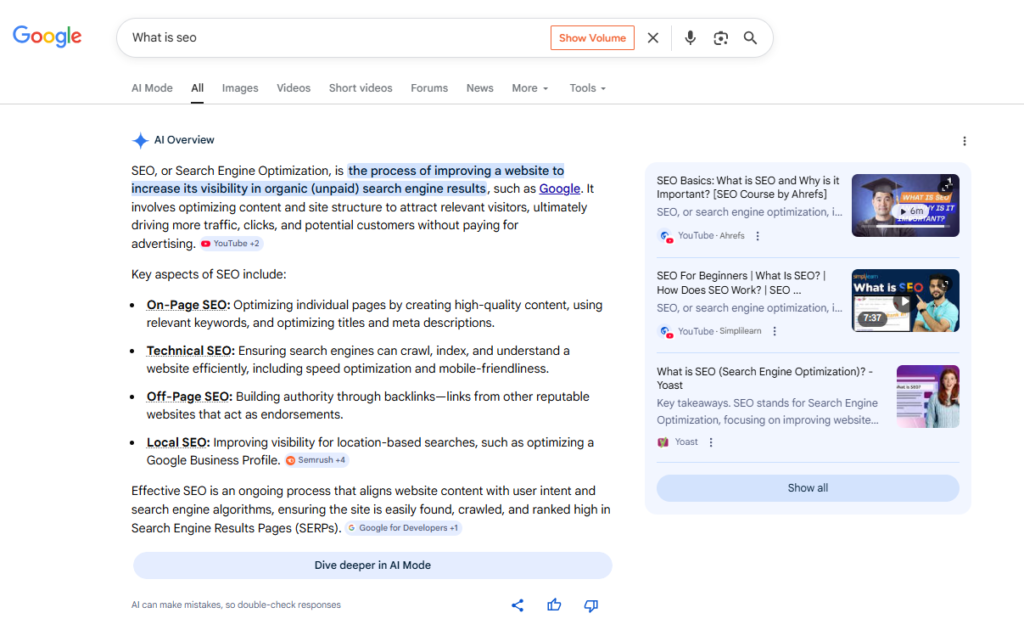
In contrast to traditional search engines which are primarily ranked on websites, AI systems often generate immediate responses to queries from users. These responses could be displayed in AI assistants chatbots, search summaries, chatbots or even generative AI interfaces.
AIO is focused on ensuring that the content is structured in a manner which artificial intelligence algorithms are able to quickly comprehend and draw meaningful information from it.
One of the fundamental tenets of AIO is the semantic clarity. AI models do not only analyze keywords, but as well the context and connections between words. Therefore, content should be written in a natural way and clearly describing concepts, rather than just repeating keywords.
Another crucial element of AIO is its structured information. Utilizing clear headings, rational paragraphs and well-organized content, AI systems recognize important sections and efficiently summarize them.
Quality expertise is a key element. AI systems tend to favor reliable sources that show competence and credibility. This means that content must be well-researched, with experts’ insights, and trustworthy sources.
For the content creators and digital marketers, AIO represents a shift from writing focused on keywords to knowledge-based content creation.
As per digital marketing expert Awais Abbasi, organizations that can adapt their strategies for content according to AI understanding will get advantages as the use of AI-powered search continues expand.
What is AEO (Answer Engine Optimization)?
Answer Engine Optimization AEO, also known as AEO is a method of optimizing content so that it can provide immediate responses to user-generated queries. Search engines of today are designed to provide instant answers rather than simply providing an array of hyperlinks.

If users ask questions such as:
- What is SEO?
- What is the impact of AI? AI impact search rankings?
- What’s the future for digital marketing?
Search engines try to show the most concise and precise answer as soon as they can.
AEO seeks to make your content the source for these solutions.
A successful strategy for AEO is to develop content based on questions. By arranging content around frequently requested questions, sites can increase the chances of being included in featured snippets of content, knowledge panels, and in voice results in search results.
Another key aspect is clarity and accuracy. Answers should be brief but instructive. Search engines like articles that address the question of the user without adding complicated.
The voice search feature is linked to AEO. As more and more people use voice assistants to find information, the content that is spoken by a person becomes more crucial. Writing with a natural, human-like voice helps content to align with the voice search queries.
FAQ sections, brief explanation paragraphs, and clearly defined headings can dramatically increase the chances of a site being chosen as a resource for answers.
From a perspective of strategic planning, Awais Abbasi emphasizes that Answer Engine Optimization is now crucial for companies that wish to remain visible in a world of search that is that is dominated by instant responses.
What is GEO (Generative Engine Optimization)?

Generative Engine Optimization also known as GEO is among the most innovative ideas in the field of digital marketing. It is focused on enhancing content to make it more efficient for AI-driven generative search systems.
Generative engines are systems that generate responses based on artificial intelligence that combines information from a variety of sources. Instead of just connecting to web pages, they produce brief explanations based upon information available.
The result is that websites have to improve their content now to be part of the AI-generated responses.
GEO requires a major importance on credibility, authority and experience. Generative AI algorithms prioritize information that is trustworthy and supported by proof.
Another key element is the unique perspectives. Content that provides original analysis, expert opinions or perspectives that are unique are more likely to get used by generative engines.
Content’s depth is crucial as well. The shortest, simplest articles could be unable to stand out in a market in which AI systems favor more comprehensive sources of information.
Furthermore, having a solid digital presence across different platforms increases the chance of being mentioned by artificial intelligence systems. AI systems.
The expert in marketing and digital technology Awais Abbasi is of the opinion that GEO will play an important part in the future of strategies for search as AI tools continue to shape the way people discover and use information on the internet.
Differences Between SEO, AIO, AEO, and GEO
Although these methods of optimization are very similar but they have different functions in the current search engine ecosystem.
Traditional SEO concentrates on improving site rankings on search engine result pages. The main objective is to increase organic traffic through optimizing the use of keywords, backlinks and technical performance.
AIO is focused on ensuring the artificial intelligence system comprehend and interpret content efficiently. The focus here is on clarity of meaning, structure of content, and expert.
AEO is designed to answer users’ questions directly. Its goal is to appear in snippets of featured content, voice search results and answer boxes that are direct.
GEO is focused on optimizing content for AI-generated summary and the generative search system. It makes sure that the content is an integral part of the AI’s explanations as well as suggestions.
Instead of replacing one another These strategies can complement each other. A complete digital marketing strategy must incorporate elements from the four strategies to increase the online presence.
Essential SEO Tools for Students and Beginners
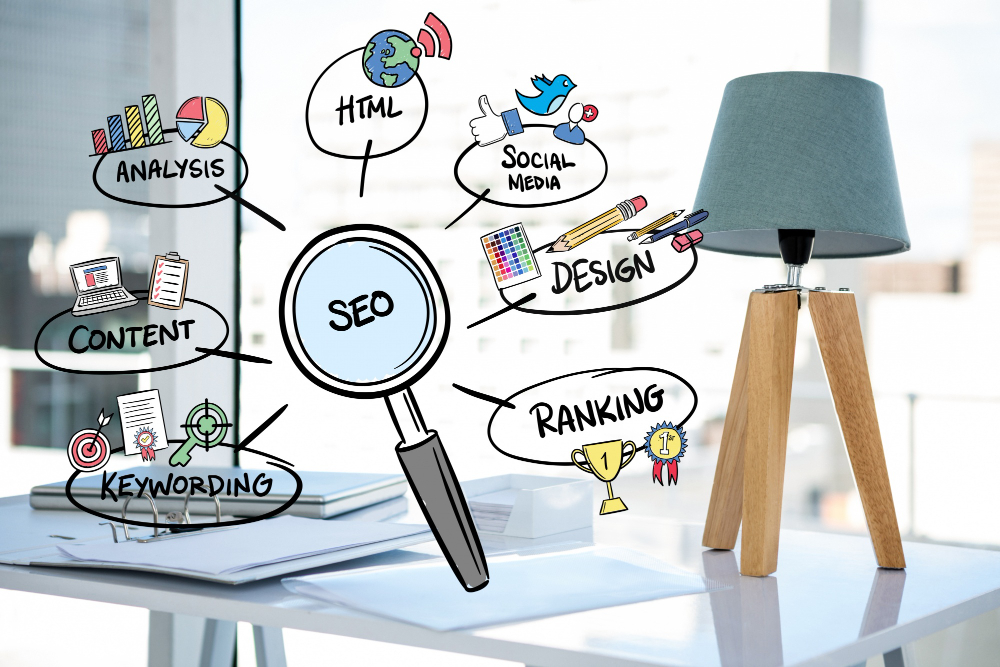
The process of learning SEO is made easier through the use of appropriate digital tools. These tools help in monitoring the effectiveness of websites, analyzing keywords, and improve the quality of the content.
The most popular device include Google Search Console, which lets webmasters monitor its performance, detect issues with indexing and analyse the rank of specific keywords.
Another option worth a look is within Google Analytics, which provides details on traffic patterns to websites as well as user behaviour as well as patterns in engagement. Understanding these metrics can assist bloggers to develop strategies for their creating content.
To research keywords, a lot of SEO experts use Ahrefs a powerful tool to identify potential ranking possibilities as well as profiles of backlinks, and strategies for competing.
Another popular SEO tool is SEMrush which provides SEO analysis, website audits, audits of websites and also suggestions to optimize content.
Students who are only starting out in SEO might benefit from the use in the form of Ubersuggest it is user friendly tool which helps in identifying keywords and ideas for content.
To improve your grammar and writing abilities, tools like Grammarly will ensure that the information is clear and professional.
Another helpful AI software to write with is ChatGPT It is useful with brainstorming, writing articles, and getting an understanding of difficult subject matter.
In a safe way helps students master SEO techniques faster while also creating content of high-quality.
Latest Google Content Policies for Bloggers and SEO (2024-2026)

Search engines have seen a significant change in recent years. Google has implemented a number of algorithmic changes along with guidelines in order to make sure that top-quality and useful content ranks better in search results. The policies are designed to limit the low-quality content, and also to prioritize websites that offer genuine value to users.
For bloggers, content writers and SEO experts understanding these rules is vital to ensure that your website is ranked correctly and you avoid penalties.
1. Google’s People-First Content Policy
One of the fundamental principles that Google has formulated Google is the concept of writing content for the masses. As per Google its ranking system they prioritize the content that is valuable and trustworthy. The content is also designed to be used by users, not just for search engines.
Bloggers must focus on creating articles that address the concerns of users instead of writing posts which is solely created to alter search results.
Google clarifies in its official document:
The most important concepts are:
- Create content that can readers, not to be indexed by search engines.
- Provide valuable and accurate details that are accurate and valuable.
- Beware of manipulative keyword stuffing techniques and SEO techniques
- Focus upon the experience of users and the clarity of the
Content created solely for the purpose of attracting attention but without offering any actual value will be taken off the list of search results.
2. Google Helpful Content Update
Google has announced the Helpful Content System to identify and reward websites that offer quality, informative content. This update is intended to limit the visibility of automated or low-quality content.
Recent improvements have boosted this system by incorporating it into Google’s primary ranking algorithm.
As an example, the major update scheduled for 2024 targeted spammy and unoriginal pages, which lowered quality content in the search results by 45 percent.
Bloggers should be aware that publishing content with thin material, copied content or artificially generated spam could affect the rankings of websites.
Yet, Google encourages creators to develop:
- Perspectives from the outside
- In-depth analysis
- Unique perspectives
- Tutorials and guides are useful
3. E-E-A-T: The Quality Standard for Content
Google examines the content of websites using the framework E-EA-T that is a reference to:
- Experience
- Expertise
- Authoritativeness
- Trustworthiness
These factors help Google to determine whether the information offered on a website is reliable and trustworthy.
https://services.google.com/fh/files/misc/hsw-sqrg.pdf
For instance, if someone writes about health, finance or cybersecurity, for instance Google prefers articles written by writers who are experts or expertise in the field.
To enhance E-E A-T signals, bloggers must:
- Include author information
- Cite reliable sources
- Provide accurate data
- Create authority within a particular area
This is why numerous websites now include the author’s bio and professional credentials.
4. AI-Generated Content Policy
Since the advent of AI-based tools, a lot of bloggers are using AI to aid in creating content. Google does not have a penalty for generated content by AI. However, the company insists that the content should be original and of top quality.
AI material that’s low quality, insufficient or produced automatically in large amounts could be eliminated or diminished in the results of searches.
Therefore, bloggers should see AI as a tool for typing rather than a replacement for information.
The most effective way to accomplish the above is by:
- Edit AI-generated drafts
- Add human insights
- Use examples and do some research.
- You must ensure that the content is original.
5. Core Updates and SEO Changes
Google regularly makes updates to their primary algorithm to improve the quality of the results it delivers. These updates concentrate on identifying sites that provide the most reliable and useful information.
Recent SEO trends show that Google has changed its primary focus on:
- Original content
- The authority for current issues
- Strong internal linkage
- High-quality experiences for the users
- Fast-loading and mobile-friendly websites
In addition, Google is increasingly using semantic search, which is when it is trying to discover the reason behind a query, rather than simply looking for keywords.
The bloggers should concentrate on the relevancy of their topics and the motives of the users, rather than rehash the same words.
Final Advice for Bloggers
Professionals in SEO and blogger. primary takeaway from the new Google guidelines is that you must create content that helps users.
Google’s algorithm updates aim to reward sites with high-quality, relevant, user-friendly and relevant content, while eliminating sites that are not of high quality.
The digital landscape continues to evolve, incorporating AI-powered search engines and engine that generates, and bloggers need to be flexible by focusing on their expertise in their area, innovating, and the user experience.
Writers as well as SEO professionals like Awais Abbasi emphasize that the integration of traditional SEO knowledge with the most recent standards of content quality is the most efficient strategy to maintain long-term search engine optimization.
Practical Strategies to Implement Modern Optimization Techniques
To keep up with the ever-changing internet, it is necessary to combine traditional SEO practices and new AI-driven strategies.
The first thing to keep in mind is that content quality should be the main goal. Producing informative, thorough and well-researched material increases the chance of being praised by search engines and AI systems.
Another motive is the fact that sites must be focused on establishing expertise in their area. Instead of publishing a variety of articles on subjects that do not have a connection, it is better to develop the foundation of specific areas of expertise.
The third aspect is organizing content properly is essential. Clear headings, an logical flow of paragraphs and well-organized sections help AI systems to process data more effectively.
Fourthly, the establishment of reliable backlinks can still be a reliable ranking signal. High-quality backlinks from trusted websites boost the credibility of a website.
Fifth, using the schema markup as well as structured information can aid search engines in understanding the nature on the web page.
Additionally, businesses should be aware of current developments in AI technology to search. As AI develops, digital marketers must to continually develop their strategies.
Professionals like Awais Abbasi insist that flexibility is one of the most crucial skills needed to succeed in the constantly evolving digital marketing market.
The Future of Search and Artificial Intelligence
Future of Search is clearly moving towards AI-driven experiences. Google is becoming more personal more interactive, more casual and proficient at handling complex queries.
Instead of simply displaying an alphabetical list of sites Google and other search engine are becoming intelligent and offer immediate advice and information.
Companies must consider ways to enhance their digital presence. Content should not only be well-ranked however, it must also display credibility in clarity, efficiency, and clarity.
Artificial intelligence is expected to enhance the way data is collected, analysed and finally delivered to users. At the end of the day, websites that focus on real expertise and high-quality information will have the best chance of success.
Experts in the field of digital marketing, such as Awais Abbasi are of the opinion that combining together with SEO, AIO, AEO and GEO will decide the next phase of search engine optimization.
Conclusion
Search engine optimization( Next Generation SEO) is no longer limited to basic keyword placement and link building. The modern digital landscape requires a deeper understanding of AI-driven search systems, evolving content policies, and advanced optimization strategies. Concepts such as AIO (Artificial Intelligence Optimization), AEO (Answer Engine Optimization), and GEO (Generative Engine Optimization) are reshaping how content is discovered, interpreted, and delivered to users.
For students, bloggers, and digital marketers, staying updated with these developments is essential for long-term success. By focusing on high-quality content, understanding Google’s guidelines, and using the right SEO tools, content creators can improve their visibility and build authority in their niche.
At the same time, learning and adapting to new technologies will continue to play a crucial role in digital marketing. Bloggers who combine traditional SEO knowledge with modern AI optimization strategies will be better prepared for the future of search.
For more insights, resources, and guides related to SEO, artificial intelligence, and digital marketing, readers can also explore Techpass, a platform where Awais Abbasi shares valuable information about emerging technologies and modern digital strategies.
As highlighted by SEO professional Awais Abbasi, the key to succeeding in the evolving search landscape lies in continuously learning, experimenting with new strategies, and creating content that genuinely helps people.