1. Introduction: The 12-Hour Flight to Nowhere
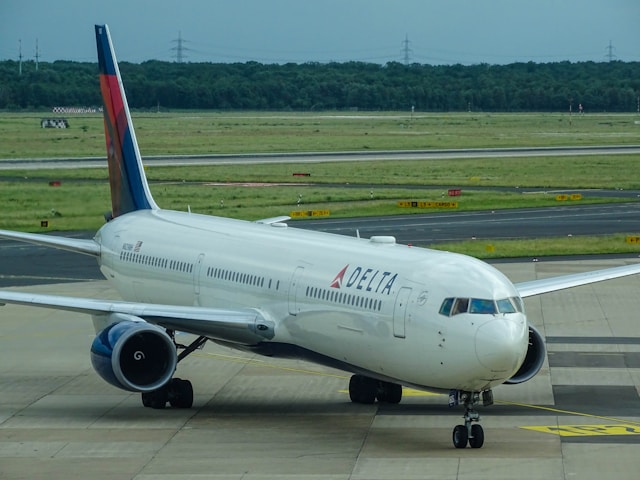
The passengers aboard Delta Flight DL275 which Delta Air Lines operated on May-27-2025 experienced an unexpected situation. The flight departed from Detroit bound for Tokyo, a journey that typically spans more than 13 hours. The Airbus-A350 reached its first western destination after flying 12-Hours because the aircraft suffered a mechanical defect that disabled it’s engine anti-ice system.
The scheduled intercontinental flight transformed into what passengers described as a “flight to nowhere.” The crew decided to change their course at mid-route because they saw the Pacific Ocean below them and had no other options which would allow them to reach Tokyo. The passengers experienced major emotional distress and encountered practical difficulties, although the aircraft executed its landing procedure without sustaining any harm, and no passengers sustained injuries.
Flight diversions which occur during ultra-long-haul routes represent an unusual occurrence, yet they remain a possibility. The requirement to change your planned route occurs when your flight encounters three specific situations, which include mechanical issues and medical crises and extreme weather conditions. The situation becomes more critical when your current location exists at great distance from both your starting point and your endpoint. The travel schedule experiences wide-ranging effects because fatigue creates missed connections which lead to lost hotel bookings.
The essential fact states that you cannot manage the plane’s systems but you have power over your reactions. The right knowledge together with proper preparation and an appropriate mindset enables you to treat a diversion as an inconvenience instead of a catastrophic event. The upcoming sections will explain the complete sequence of events which includes essential passenger actions during initial critical moments and ground logistics operations and information about your entitlements.
2. The First 30 Minutes: Immediate Actions Onboard
Though the captain’s announcement is normally serene and regularly paced, the instant he mentions “diversion,” there is an enormous sea change in the cabin atmosphere. After Delta DL275 announced to its passengers that there was a malfunction with its engine anti-ice system, resulting in the rerouting of the aircraft to LAX, many passengers had confused or anxious reactions. At this point, the best that you can do is remain calm.
Pay close attention to the captain’s explanation of why you’re being diverted. The reason for the diversion is important because it indicates how the airline will respond in the future. In this particular case, the mechanical issue is “in the airline’s wheelhouse” to correct as a part of its operating system. Such a difference, very often, will determine what kind of support you’re entitled to when it comes to receiving meal vouchers, hotel accommodations, etc. A weather diversion is likely to mean significantly less support provided by the airline; however, if the service is also being disrupted as the result of a maintenance issue being repaired, then it is uncommon for the airline to take a lesser course of action under its policy.
If the in-flight Wi-Fi is working, don’t hesitate to connect right away. Almost all long-haul aircraft including Delta’s Airbus A350 fleet have onboard connectivity options. Send messages to your family, workmates, or whoever it is that you expect to see waiting for you at the original destination. If you have already booked local transportation or lodging in Tokyo, get in touch with these service providers immediately to minimize the cancellation fees.
At the same time, launch the airline’s app on your phone. Delta’s application, in particular, is known to get into the rebooking process automatically as soon as a diversion is confirmed. Passengers who check early are often given access to the alternative routing options before the airport gets busy. Some DL275 travelers even managed to get next-day departure and alternative transpacific connections before they left the aircraft.
It is very important how you think during these 30 minutes. Instead of being upset, think about what you can do next. You will need information, communication, and preparation at this stage.
3. Navigating the Logistics: Ground Game at LAX
Landing in Los Angeles rather than Tokyo changes your travel situation profoundly in an instant. You do not come as an international arrival passenger to Japan anymore but as a diverted traveler in California. As soon as the airplane doors open, the race for assistance starts.
The best way is to use a dual strategy. Firstly, get into the physical customer service line at the gate. Face-to-face agents can hand out hotel vouchers, meal credits, and printed confirmations. Meanwhile, phone the airline’s customer support number. A hands-free device helps you stay in line and possibly get your issue resolved sooner on the phone.
Flight rerouting can cause controlled chaos. At the same time, hundreds of passengers will need to be rebooked. Having both digital and in-person channels of communication will significantly raise your odds of getting improved alternatives.
Luggage adds another dimension of difficulty. In most recorded diversions due to equipment failure, passengers’ checked bags remain on the plane unless they are told differently. Taking the bags out can greatly postpone the fixing of the plane and the next step in the operation. Get the answers you need from gate agents and inform yourself: Will the airplane stay? Will your bag be sent on the right way automatically? Do you have to go to baggage claim?
Documentation matters just the same. Don’t throw away your boarding pass. Grab delay notification screenshots. Snap photos of any crew member’s written communication. Get hold of your digital food, transportation, or essentials receipts. If later you have to go for refunds or claim travel insurance, such details will be indispensable.
With all its size, LAX in particular can be an advantage to the passenger. Being a major hub, it has numerous hotel partnerships, several Delta desks, and lots of international connections going forward. Compared to being inconvenienced, you are much better off getting redirected to a fully equipped hub than to a small airport with limited facilities.
4. Knowing Your Rights: Compensation & Duty of Care
The United States establishes different passenger rights because its regulations do not match the European Union’s strict rules for passenger compensation which include EC 261/2004.
The Contract of Carriage established by Delta Air Lines and Department of Transportation regulations determine the obligations for U.S. flights which Delta Air Lines operates. The airlines provide “duty of care” to passengers during controllable disruptions which include mechanical breakdowns. The standard procedure includes providing hotel rooms for overnight stays and meal vouchers and arranging transportation from hotels when necessary. Passengers on DL275 reported that overnight hotel accommodations and meals were provided to travelers who became stranded in Los Angeles. The process to receive assistance requires people to request help because support does not automatically come to them.
U.S. law does not require cash payments to passengers who experience flight delays or diversions. The airlines make goodwill gestures to passengers. The airlines provide these gestures as SkyMiles bonuses and future travel credits and vouchers. People who maintain polite interactions with others have a better chance of receiving special accommodations.
Travel insurance can also play a significant role. Trip interruption policies and extended delay policies provide reimbursement for personal expenses which exceed airline compensation. Travelers who use credit cards with travel protection features receive more advantages. You should review these policies before traveling to understand your safety net.
Your rights become your power because they help you deal with unknown situations. Although diversions create problems for all travelers, understanding airline responsibility systems enables you to handle your recovery process more efficiently.
5. The Human Element: Surviving the Mental Toll
The experience of a 12-hour flight that returns to its starting point proves more demanding than completing an actual flight. Your body starts to adapt to the new time zone but then experiences a sudden shift back to your original time zone. People experience two separate challenges because mental frustration increases their level of tiredness. The body requires water to function properly. The dry conditions of airplane cabins become more severe when flights extend beyond normal duration. Recovery from exercise becomes easier when people drink water throughout the day and limit their caffeine and alcohol intake and choose to have small meals.
The body uses natural light exposure at landing time to adjust its internal clock. Your body clock will reset itself when you go outside during the daytime hours while you are stuck in Los Angeles for the night. People can decrease their muscle tightness which develops after sitting for too long by doing stretching exercises and walking for short distances.
People need to change their emotional response by changing their experience. The period of time which interrupts your work should be treated as a sudden stop which you should use to rest. LAX offered some passengers the chance to stay at a hotel for rest instead of spending all their time to recover from jet lag in Tokyo. People gain back their ability to control their situations when they stop thinking of themselves as victims of disruptions and start to see themselves as controlling their environments.
Travel unpredictability is part of aviation’s reality. The safety incidents that occur obviously happen very infrequently but they serve as a reminder that all safety decisions should protect human life before managing scheduled activities.
6. Conclusion of Delta Flight DL275 Diverted LAX
The diversion of Delta Flight DL275 serves as a reminder that even advanced aircraft and experienced crews sometimes encounter technical challenges. The engine anti-ice system malfunction forced the crew to select a safe route which led them to Los Angeles because they wanted to prevent forthcoming issues that would arise during their overocean flight.
The outcome showed that aviation safety systems functioned properly because passengers experienced delays and their plans were interrupted and they faced emotional distress. The aircraft landed safely. The people onboard remained uninjured The system for support functions started working. The flight diversion process requires successful management through proper planning and adequate knowledge and mental stability.
The process requires you to save receipts while you track your flight status through airline applications and learn about your passenger rights and effectively interact with others. An unexpected travel problem transforms into a success story when people demonstrate their ability to cope with challenges. The first rule of long-distance air travel states that pilots must prioritize safe landings above all other mission objectives.
Discover more expert articles and resources on the Techpass Blog